CAR-T Unit, Cell and Gene Therapy

Cell and gene therapies represent a paradigm shift in modern medicine, offering curative potential for conditions previously considered untreatable. ICMED S.r.l. provides specialized consulting to healthcare facilities establishing or expanding their cell and gene therapy capabilities, guiding them through the complex regulatory landscape and preparing for qualification inspections.

Cell and Gene Therapies

The field of cell and gene therapies has grown rapidly, with CAR-T cell therapy used in the treatment of selected haematological malignancies. These advanced therapy medicinal products (ATMPs) require a fundamentally different approach to quality management, facility design, and clinical operations compared to traditional treatments. CAR-T therapy involves the genetic modification of a patient's own T-cells to express chimeric antigen receptors, enabling them to recognize and destroy cancer cells. This process demands seamless coordination between clinical teams, apheresis units, cell processing laboratories, and often external manufacturing facilities. Beyond CAR-T, the broader landscape of cell and gene therapies includes gene-modified cell therapies, tissue-engineered products, and somatic cell therapies. Each presents unique challenges in terms of manufacturing, quality control, logistics, and clinical administration. ICMED's expertise covers the full spectrum of these advanced therapies, supporting centres in preparing to deliver them safely.

Services Offered

ICMED S.r.l. supports healthcare facilities with a comprehensive range of services designed to establish and maintain cell and gene therapy capabilities: - Staff training and competency development: tailored education programs covering ATMP regulations, GMP requirements, clinical protocols, and quality management specific to cell and gene therapies - Organizational system development: design of workflows, roles, and responsibilities that ensure efficient and compliant operations across all involved units - Document management system: creation of the complete documentation framework including quality manuals, SOPs, batch records, deviation and CAPA procedures, and training records - Internal verification and audit: systematic assessment of readiness across all operational areas, with detailed findings and corrective action recommendations - Regulatory strategy: guidance on navigating the complex regulatory framework governing ATMPs, including EU Regulation 1394/2007, national transposition measures, and hospital exemption pathways - Supply chain and logistics management: support in establishing robust chains of custody for cellular products, including cryopreservation, transport, and traceability systems

Centre Qualification

Healthcare facilities wishing to administer CAR-T and other cell and gene therapies must pass rigorous qualification inspections conducted by pharmaceutical manufacturers and regulatory authorities. ICMED provides expert guidance through this critical process. Our qualification support includes: - Pre-qualification assessment: comprehensive evaluation of the facility against manufacturer-specific and regulatory requirements, identifying all gaps requiring remediation - Qualification dossier preparation: compilation and review of all documentation required for submission to pharmaceutical companies and regulatory bodies - Mock qualification visits: simulation of the official qualification inspection, conducted by our team on the basis of the applicable inspection criteria - Remediation support: hands-on assistance in addressing any deficiencies identified during pre-qualification assessments or official inspections - Multi-product qualification: strategic planning for centres seeking qualification for multiple CAR-T products from different manufacturers, optimizing shared processes while meeting product-specific requirements Our track record in successfully guiding centres through qualification demonstrates our deep understanding of what manufacturers and regulators expect.

GMP Infrastructure

Cell and gene therapy operations require infrastructure that meets Good Manufacturing Practice (GMP) standards. Whether you are building a new facility or adapting existing spaces, ICMED provides expert consulting on GMP-compliant infrastructure. Our GMP infrastructure services include: - Facility design review: assessment of architectural plans and specifications against GMP requirements, including cleanroom classification, air handling, environmental monitoring, and material/personnel flow - Cleanroom qualification support: guidance on Installation Qualification (IQ), Operational Qualification (OQ), and Performance Qualification (PQ) protocols for cleanroom environments - Environmental monitoring programs: design and implementation of viable and non-viable particle monitoring, temperature and humidity controls, and pressure differential management - Equipment qualification: support in qualifying critical equipment including biological safety cabinets, incubators, cryostorage systems, and cell processing devices - Contamination control strategy: development of comprehensive contamination prevention measures, including gowning procedures, cleaning validation, and aseptic technique training ICMED's approach ensures that your infrastructure investment is optimized for compliance while remaining practical and operationally efficient. We help you avoid costly design errors and ensure that your facility meets current and anticipated regulatory requirements.

Who it is for

  • Haematology units and transplant programmes starting or expanding CAR-T and other immune effector cell (IEC) activities
  • Facilities that intend to qualify with the manufacturing companies
  • Cell and gene therapy units, hospital pharmacies and laboratories involved in the product chain

Common critical points

  • Manufacturer requirements and FACT-JACIE IEC standards to be integrated in one quality system
  • Chain of identity and custody of the product, from leukapheresis to administration
  • Roles and training of the clinical and laboratory team, including management of adverse events
  • Infrastructure and processes that require qualification and validation
  • Coordination between ward, apheresis, laboratory and pharmacy

What ICMED does

  • Organisational and documentation feasibility study
  • Gap analysis against the applicable requirements: FACT-JACIE IEC standards, manufacturer requests, regulations
  • Quality system and procedures for the patient pathway and traceability
  • Training of the staff involved
  • Internal audits and mock inspection
  • Support on the GMP aspects of processing, where relevant

Collaboration path

  1. Assessment — feasibility and comparison with the applicable requirements
  2. Work plan — actions, responsibilities and timing agreed with clinicians, laboratory and pharmacy
  3. Implementation — procedures, forms, training and definition of the chain of custody
  4. Audit and verification — internal audits and mock inspection
  5. Maintenance — indicator monitoring and periodic audits, if requested

Indicative deliverables

  • Feasibility and gap analysis report
  • Product pathway map with control points and responsibilities
  • Procedures and forms for the processes concerned
  • Audit report and corrective action plan
  • Evidence of the training delivered

Actual content depends on the centre and the agreed scope.

Path and deliverables are indicative: they are defined after the assessment, based on your facility. The outcome of accreditations, authorisations, certifications or inspections depends on the decisions of the competent bodies and cannot be promised by ICMED. The rules and standards mentioned are not an exhaustive list of the applicable requirements.

Preliminary assessment for your CAR-T centre

Describe the project: we will outline how we could work together.

Request an assessment
Scientific Insights & Magazine

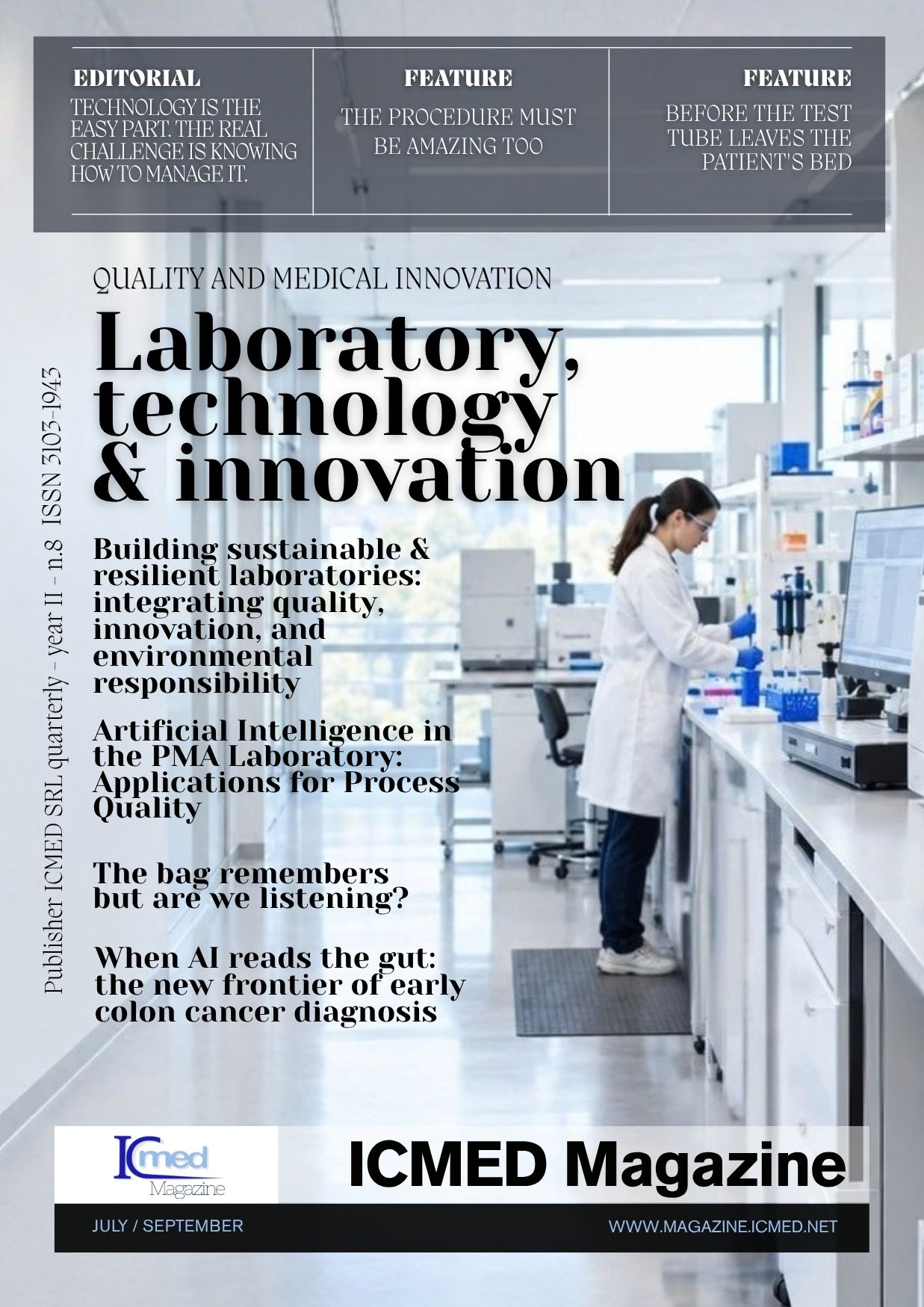
ICMED Magazine (ISSN 3103-1943) — the scientific journal dedicated to quality and innovation in healthcare

Scientific journal with ISSN 3103-1943 and a DOI for each article. From the Magazine to training: turning an issue into an online (FAD) course is a project under definition and no course based on the Magazine is available today. To apply the topics in your facility: consulting, with IAAPP as a complementary digital service.